Low yield and slow recovery
We redevelop the borehole to clear fines and restore inflow where the aquifer can still deliver, then confirm stability before handover.
Serving Bulawayo, Bulawayo Province & surrounding areas
Mon–Fri 8am–6pm · Sat 9am–2pm
Borehole rehabilitation · Bulawayo
Restore yield, clear blockages, and stabilise damaged boreholes with a practical plan for repair or redrilling, based on what we find on site.
Restore stable borehole performance
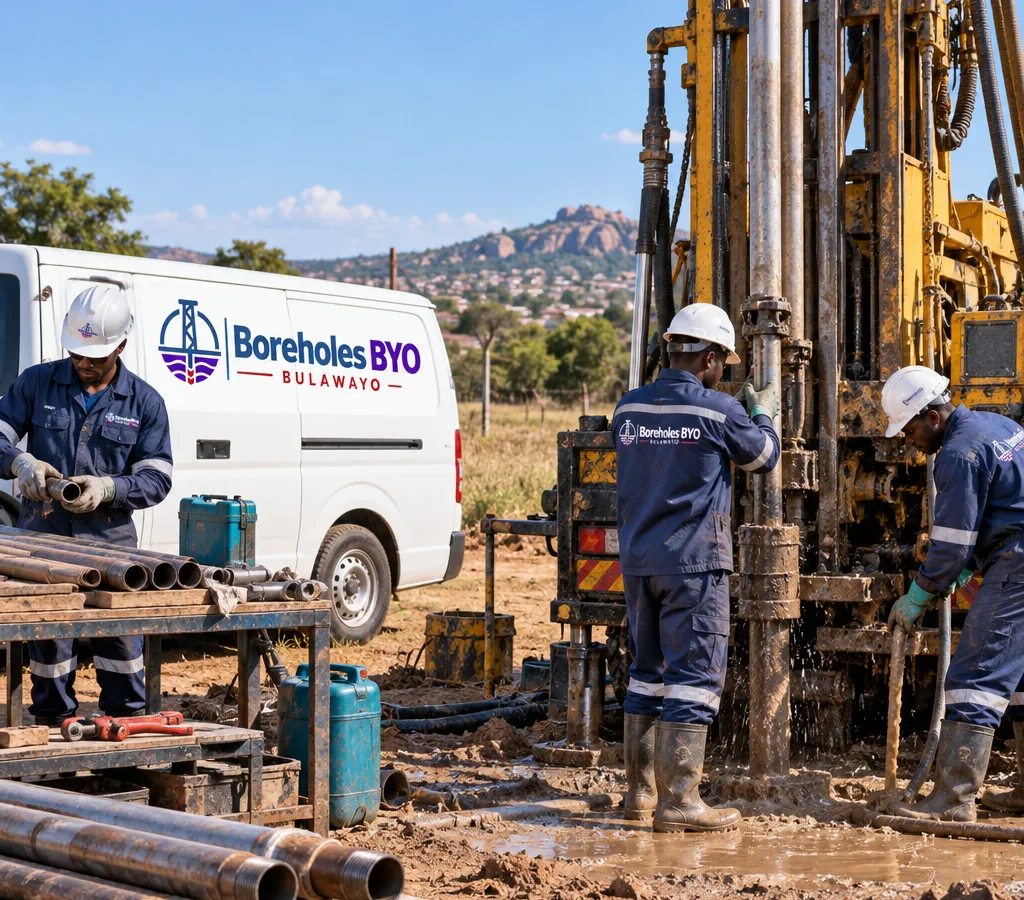
If your borehole has become low-yield, sandy, blocked, or has started collapsing, you need a fix that targets the real failure point, not guesswork. As a Rehabilitation Borehole specialist Bulawayo property owners rely on, Boreholes BYO assesses the borehole condition and then recommends the right route: mechanical cleaning, airlifting, redevelopment, pump and rising main checks, or redrilling where the hole is beyond repair.
Bulawayo conditions can be tough on boreholes: long dry spells push systems harder, and neglected boreholes silt up or scale over time. The practical goal is simple. Bring back stable flow and protect the installation so you are not repeating the same failure next season. Our team works like Bulawayo's trusted borehole drilling team should: inspect first, explain what is happening, then carry out the rehabilitation work with a clear scope.
Diagnose before major work
A proper rehabilitation starts with identifying what changed and where the restriction is. We look at symptoms (air spurts at taps, sand in water, intermittent running, frequent pump trips) and then work through the likely causes.
Typical checks and diagnostics include:
If the borehole is structurally unstable or repeatedly silts up soon after cleaning, Bulawayo Rehabilitation borehole drilling may not be enough on its own. In those cases, we scope redrilling so the new hole is placed and constructed to reduce repeat problems.
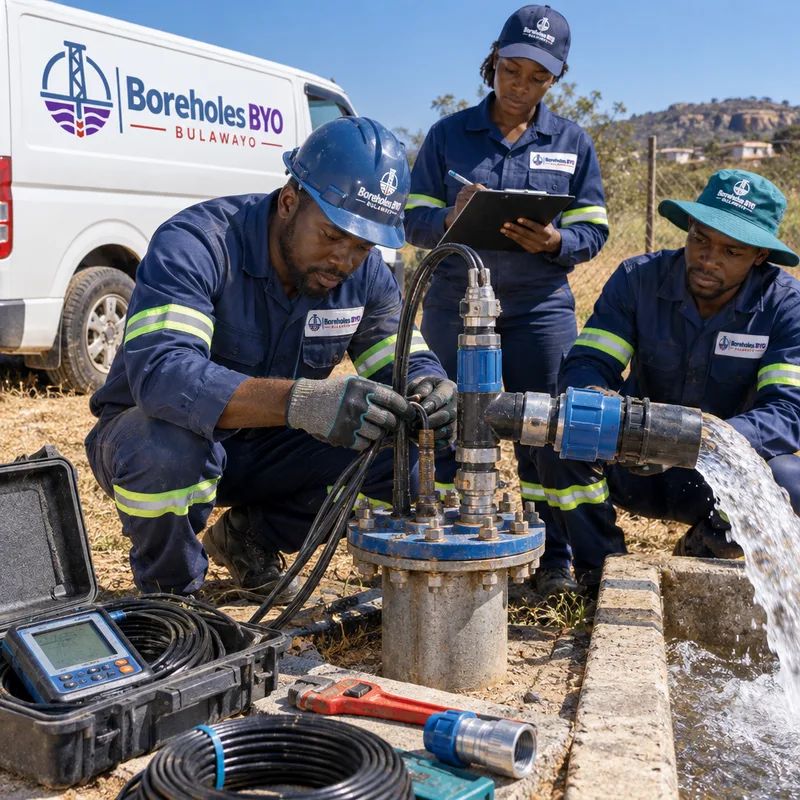
We redevelop the borehole to clear fines and restore inflow where the aquifer can still deliver, then confirm stability before handover.
Sanding often points to screen issues, poor development, or formation disturbance. We clean and redevelop, and advise on filtration and pump placement to reduce wear.
Mineral scale and debris reduce diameter and choke inflow. We use appropriate cleaning methods for the borehole condition and materials present.
Where a borehole is collapsing or has lost integrity, rehabilitation may be temporary. We advise honestly when redrilling is the safer long-term option.
Electrical and mechanical faults can mimic borehole failure. We isolate whether the issue is downhole conditions or the pump system before major work begins.
Abrasive sand destroys pumps quickly. We address the cause and help set the system up for longer service intervals.
Assessment to stable performance
We check what has changed (yield, water quality, pump behaviour) and confirm borehole access, headworks condition, and any previous work done.
Based on the borehole condition, we choose the rehabilitation approach: cleaning, airlifting, redevelopment, or a redrilling plan if the hole is compromised.
We carry out the agreed scope and keep you informed if we find structural damage or restrictions that change the plan.
We verify whether the borehole holds a workable yield and whether sand or turbidity settles to acceptable levels for your intended use.
You receive practical guidance on pump sizing, intake depth, run times, and maintenance intervals, based on what we observed on your installation.
Property-specific pricing
Borehole rehabilitation in Bulawayo typically ranges from about USD $250 to $1,500+, depending on whether the job is a straightforward clean-and-redevelop or a complex recovery with repeated airlifting and system repairs. Minor pump-system troubleshooting and basic cleaning tend to sit at the lower end, while severe sanding, heavy scale, or suspected collapse increases time and equipment needs.
Final price depends on access, borehole depth, the level of blockage or silt, water behaviour during test pumping, and whether you also need pump, rising main, or electrical work addressed. The exact cost is confirmed after an on-site inspection and a written scope.
When a new hole is the safer option
Some boreholes cannot be economically stabilised. If the casing has failed, the hole is collapsing, or the borehole repeatedly silts up soon after cleaning, redrilling is often the most reliable fix.
As a Redrilling Borehole specialist Bulawayo clients contact when a borehole is failing, we focus on two things:
If you are dealing with a problem borehole in a high-demand property (multi-tenant, garden irrigation, small business use), a staged approach often works best: attempt rehabilitation first where the structure allows, then move to redrilling only if performance remains unstable.
Borehole rehabilitation experiences
“Our borehole started pumping sand and the yield dropped fast. They inspected the setup, did the rehabilitation, then tested it properly before leaving. The water cleared and the pump stopped tripping.”
“We thought we needed a new borehole straight away. After checking the hole and the pump line they explained the options clearly, tried rehabilitation first, and only then advised on redrilling when the casing issue showed up.”
Answers before work starts
If the borehole is structurally sound but blocked, silted, scaled, or poorly developed, rehabilitation is usually the first step; if the borehole is collapsing, has casing failure, or returns to sanding soon after cleaning, redrilling is often the more reliable option. The quickest way to decide is an on-site assessment that checks borehole behaviour during pumping and the condition of the installation at the headworks.
It can, if the sand is caused by silt build-up, disturbed formation near the screen, or an installation issue like incorrect pump setting depth. If the borehole has screen or casing damage, rehabilitation may improve things temporarily but sanding can return, and redrilling may be required for a long-term fix.
Yield drops are commonly caused by silt and fines clogging inflow zones, mineral scale reducing effective diameter, pump wear that reduces performance, or leaks in the rising main that waste pressure. In Bulawayo, heavy demand during dry periods can also expose a marginal yield that previously seemed fine, which is why test pumping after rehabilitation matters.
Yes. Rehabilitation Borehole company Bulawayo clients choose should be able to diagnose and work on existing installations, regardless of who drilled them, as long as the borehole is accessible and safe to service. We start with what is measurable on site and explain any limits before work begins.
Many rehabilitation jobs can be completed within a day, but time depends on depth, severity of blockage, and how the borehole behaves during redevelopment and test pumping. If repeated airlifting and settling cycles are needed to clear sand or turbidity, it can take longer, and we will set expectations after the initial assessment.
Yes. Test pumping is the practical proof that the borehole is usable: it helps confirm whether yield is stable and whether water clears to a workable quality for your intended use. We use the results to advise on pump sizing, intake depth, and operating cycles to protect the system.
Describe the symptoms you are seeing and the intended water use. We will assess the borehole, explain whether rehabilitation or redrilling makes sense, and provide a written scope before any major work starts.