
A yield target that matches your farm use
Irrigation, livestock, and packhouse wash-down have different flow patterns. We plan around your peak demand and run time so the borehole and pump are not under-sized.
Serving Bulawayo, Bulawayo Province & surrounding areas
Mon–Fri 8am–6pm · Sat 9am–2pm
Agricultural borehole service · Bulawayo
Secure a dependable water source for irrigation, livestock, and packhouse use with a clear drilling plan, the right borehole depth, and properly sized pumping equipment for your farm conditions.
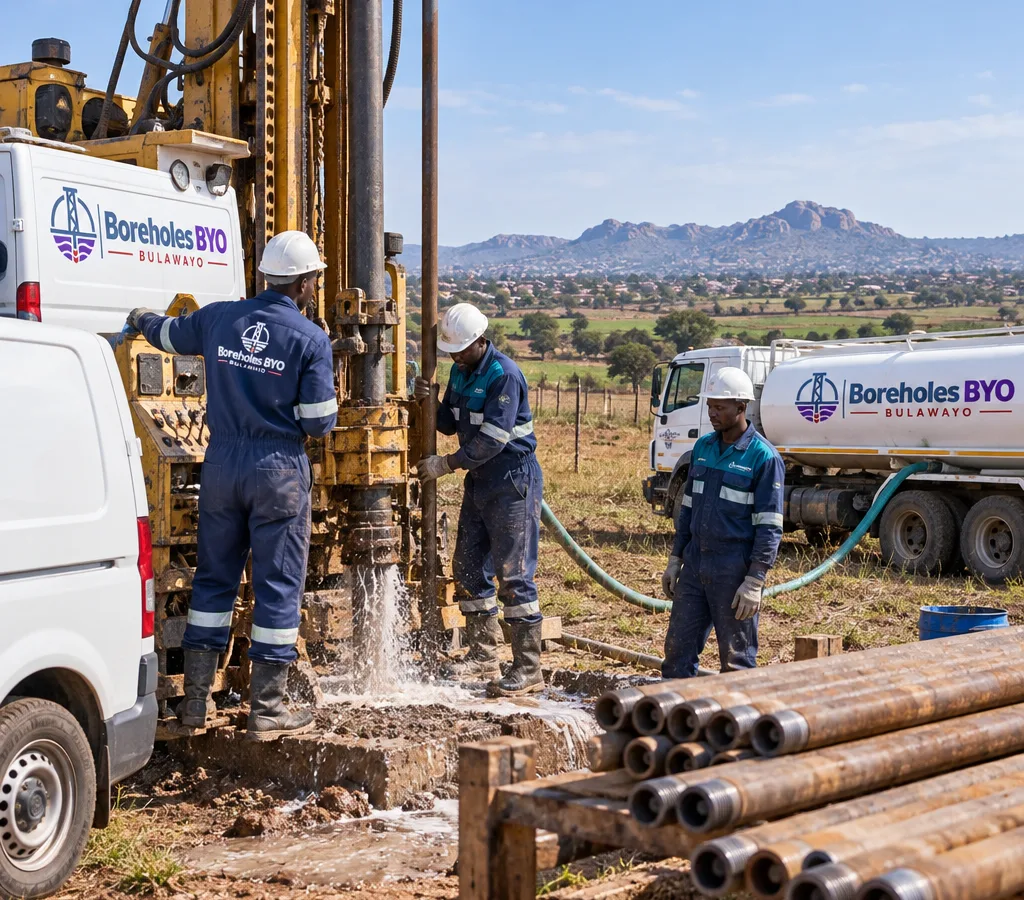
Planned for agricultural demand
Agricultural Borehole services Bulawayo are about one thing: getting you a borehole that supplies the water your operation needs, reliably, and with equipment that can run day after day. On farms and smallholdings around Bulawayo, that usually means planning for seasonal swings, long pumping hours, and the realities of access roads, power availability, and storage.
Boreholes BYO is a professional borehole drilling company in Bulawayo delivering agricultural borehole drilling with a practical approach: confirm the scope, drill to the right depth for your site, construct the borehole correctly, then match a pump and controls to your required flow rate and head. If you are irrigating, expanding livestock numbers, or stabilising your household supply on a plot, we help you make decisions that reduce downtime later.
Complete agricultural scope
A proper agricultural borehole is more than the drilling day. It is the full chain from siting through to a stable yield and a pump installation that suits your duty cycle.
Typical scope for Agricultural Borehole drilling Bulawayo includes:
If you are also planning tank storage, pipeline trenches, or irrigation layout, those decisions affect pump sizing and control choices. It helps to discuss them up front so the borehole installation fits the whole water system instead of becoming a bottleneck.
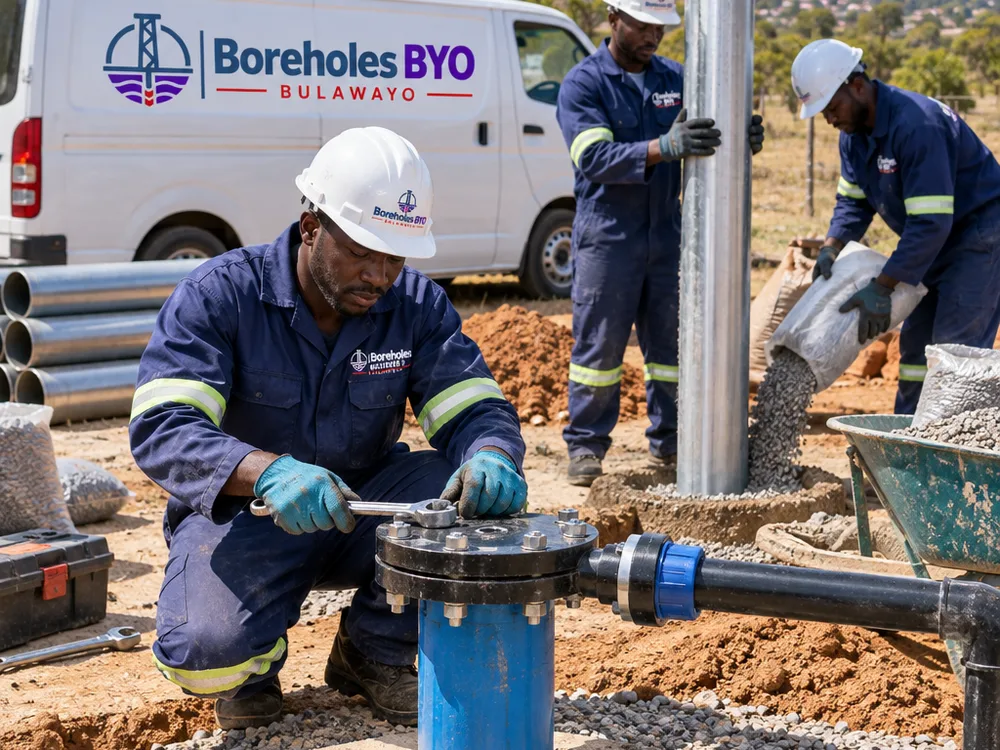
Farm-focused workmanship
Irrigation, livestock, and packhouse wash-down have different flow patterns. We plan around your peak demand and run time so the borehole and pump are not under-sized.
Correct casing, appropriate screen intervals where needed, and a proper sanitary wellhead reduce sand pumping and contamination risk over time.
Pump selection should follow test pumping and site realities such as static level, drawdown, and the height to tanks or pivot connections.
Farm access can change with weather and field conditions. We factor in rig access, turning space, and future maintenance access when positioning the borehole.
You get a plain-language plan: what will be done, what is included, what affects price, and what information is still being confirmed on site.
Local conditions shape the plan
Agricultural sites vary widely around Bulawayo Province, and the best drilling plan depends on how your land is set up.
If you are on smallholdings around Burnside or the peri-urban edges, access is usually straightforward but the water system often has mixed use (home plus gardens plus animals). That tends to call for sensible tank storage and controls to avoid constant pump cycling.
Farms towards the Matopos side can involve longer pipe runs and elevation changes to storage tanks or kraals, which directly affects pump head and cable sizing. In areas closer to the industrial corridors near Belmont and Kelvin, some agricultural users prioritise redundancy and quick service access because production schedules are tight.
Instead of guessing, we focus on the parts that change outcomes: where you need the water, how far it must travel, how many hours per day you will pump in season, and what power source you have available.
From demand check to installation
We start with your use case: irrigation type, livestock numbers, storage, and any planned expansion. That guides yield targets and installation choices.
We choose a drilling position that works for the rig and for your long-term system: distance to tanks, space for maintenance, and safe placement away from contamination sources.
We drill, then construct the borehole with appropriate casing and completion methods for the ground conditions encountered on site.
We develop the borehole and run test pumping to understand yield and drawdown behaviour. This is the basis for correct pump sizing.
We install pumping equipment and connect to your farm water system, with controls suited to tanks, pressure needs, and your preferred operating routine.
Property-specific pricing
Agricultural borehole drilling in Bulawayo typically ranges from about US$1,800 to US$6,500+ depending on drilling depth, ground conditions, casing requirements, and whether your quote includes a pump and full installation. A basic drilled and constructed borehole is often at the lower end, while deeper drilling, heavier casing, and complete pump-to-tank systems push costs higher.
Final price changes with access for the rig, distance to tanks and pipelines, power setup, and what test pumping shows about yield and drawdown. The exact cost is confirmed after a site visit and scope check.
Agricultural client experiences
“We needed a borehole that could handle livestock plus a small irrigation block. The team explained the depth plan, did test pumping, and sized the pump to our tank height. The water has been steady through peak season.”
“Good communication from the first site walk-through. They set the borehole in a spot that made the pipe run to the tanks simple, and the installation was neat and serviceable.”
Answers before drilling starts
Most agricultural borehole projects take a few days from mobilisation to a completed borehole, but the timeline depends on access, drilling depth, and whether pump installation is included. Drilling and construction may be quick on an easy site, while deeper drilling, development, and test pumping add time. If you need trenching to tanks or long pipeline runs, plan for additional days.
Depth is determined by what is encountered while drilling and confirmed with development and test pumping, then pump size is selected to match the tested yield and your total dynamic head to the point of use. For irrigation, we look at required flow rate, duty cycle, lift to tanks or pivots, and pressure needs. The goal is a pump that can run your schedule without excessive cycling or operating outside its efficient range.
Yes, one borehole can supply mixed use if the tested yield supports the combined demand and the system is designed properly. In practice, this often means using storage tanks and controls so household pressure is stable while agricultural draw-off happens at higher flow. We will advise if it is better to separate circuits, add storage, or adjust pumping times to protect supply.
Sand pumping usually comes from incomplete development, incorrect screen or casing choices, or pumping too hard for the formation. Prevention starts with correct borehole construction and proper development to stabilise the formation, followed by pump selection that matches the borehole's tested behaviour. If sand shows up, the fix can involve additional development, adjusting the pump intake level, or changing operating rates.
Yes, Boreholes BYO takes on agricultural borehole work across Bulawayo Province, including farms, plots, and smallholdings outside the city where access and system design are often the main challenges. Share your approximate location and water use plan, and we will advise on a realistic scope and what information we need at the site visit.
Have a clear drilling point or a few options, confirm access for a heavy rig, and identify where water must be delivered (tanks, troughs, irrigation tie-in). It also helps to know your power situation and to mark any known underground services or sensitive areas. If you are planning storage tanks or irrigation upgrades soon, mention it early so the borehole and pump setup aligns with the full system.
Share your location, intended water use (irrigation, livestock, or mixed), and any tank or pipeline plans. We will recommend a practical drilling scope and the right pump setup based on real site conditions.